
In today’s digital era, businesses are competing in an increasingly crowded and fast-paced market. Consumers are more informed, attention spans are shorter, and marketing channels are increasingly fragmented. To stay ahead, companies must work smarter, not harder. This is where marketing automation becomes a game-changer. By leveraging technology to automate repetitive marketing tasks, businesses can streamline operations, optimize campaigns, and convert leads into loyal customers.
In this comprehensive guide, we’ll explore what marketing automation is, why it matters, the tools you can use, and practical strategies to implement it successfully.
What is Marketing Automation?
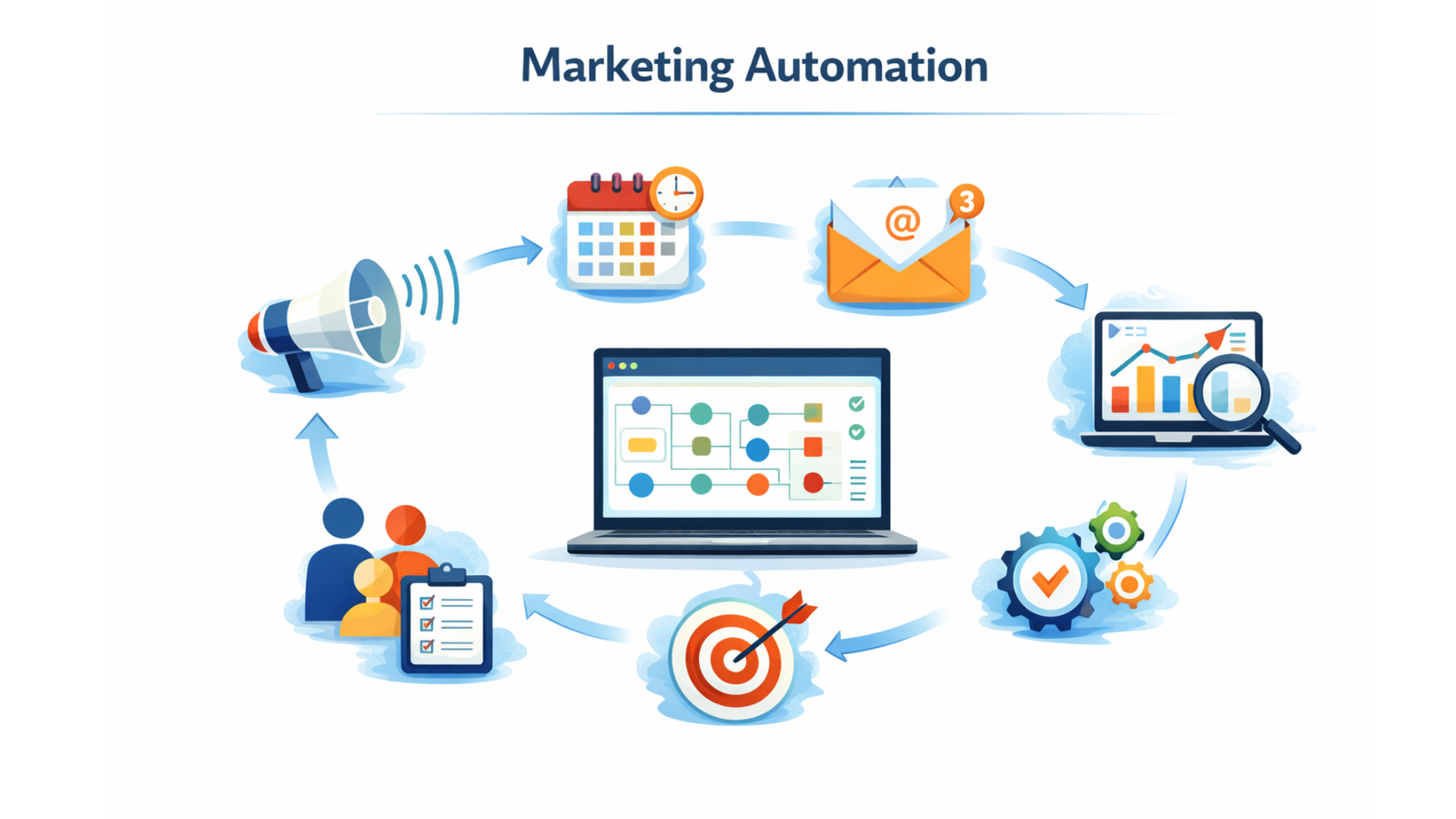
At its core, marketing automation is the process of using software and technology to manage marketing tasks automatically. Rather than manually sending emails, posting on social media, or tracking leads, marketing automation platforms handle these processes efficiently, ensuring your campaigns run smoothly and effectively.
Marketing automation isn’t about replacing human marketers; it’s about augmenting their efforts. It allows teams to focus on strategy, creativity, and relationship-building, while repetitive or time-consuming tasks are managed by technology.
Key components of marketing automation include:
- Email Marketing Automation – Automated sequences, drip campaigns, and behavior-triggered emails.
- Lead Nurturing – Segmented messaging based on user behavior and stage in the sales funnel.
- Customer Relationship Management (CRM) Integration – Centralized data for personalized campaigns.
- Social Media Automation – Scheduling posts, tracking engagement, and analyzing metrics.
- Analytics and Reporting – Insights to optimize campaigns and increase ROI.
The Role of Marketing Automation in Today’s Business Landscape
1. Time and Resource Efficiency
Manual marketing tasks are time-consuming. From sending emails individually to posting on multiple social channels, repetitive tasks drain energy and resources. Marketing automation handles these processes efficiently, allowing your marketing team to focus on high-value activities such as content creation, strategic planning, and customer engagement.
For example, instead of manually sending welcome emails to new subscribers, an automated workflow can send personalized emails immediately after a user signs up, saving hours of manual labor each week.
2. Personalization at Scale
Modern consumers expect personalized experiences. Generic, one-size-fits-all campaigns no longer resonate. Marketing automation enables businesses to deliver personalized messaging at scale.
By tracking user behavior, preferences, and interactions, automation tools can segment audiences and trigger highly relevant messages. For instance, a customer who browses a specific product category on your website can automatically receive targeted emails with recommendations, discounts, or content tailored to their interests.
3. Lead Nurturing and Conversion
Not all leads are prepared to purchase immediately. Marketing automation allows businesses to nurture leads over time. Through drip campaigns, behavior-based triggers, and personalized communication, leads can be guided along the customer journey until they are ready to convert.
For example, a B2B company might use automation to send educational content to new leads, gradually building trust and demonstrating value before offering a sales consultation. This systematic approach increases the likelihood of conversion and strengthens customer relationships.
4. Data-Driven Decision Making
One of the most significant advantages of marketing automation is access to analytics and insights. Automation platforms provide detailed reports on engagement, conversion rates, campaign performance, and customer behavior.
With this data, marketers can make informed decisions, identify areas for improvement, and continuously optimize campaigns. By testing subject lines, content formats, and call-to-actions, businesses can refine their strategies to maximize results.
Top Marketing Automation Tools
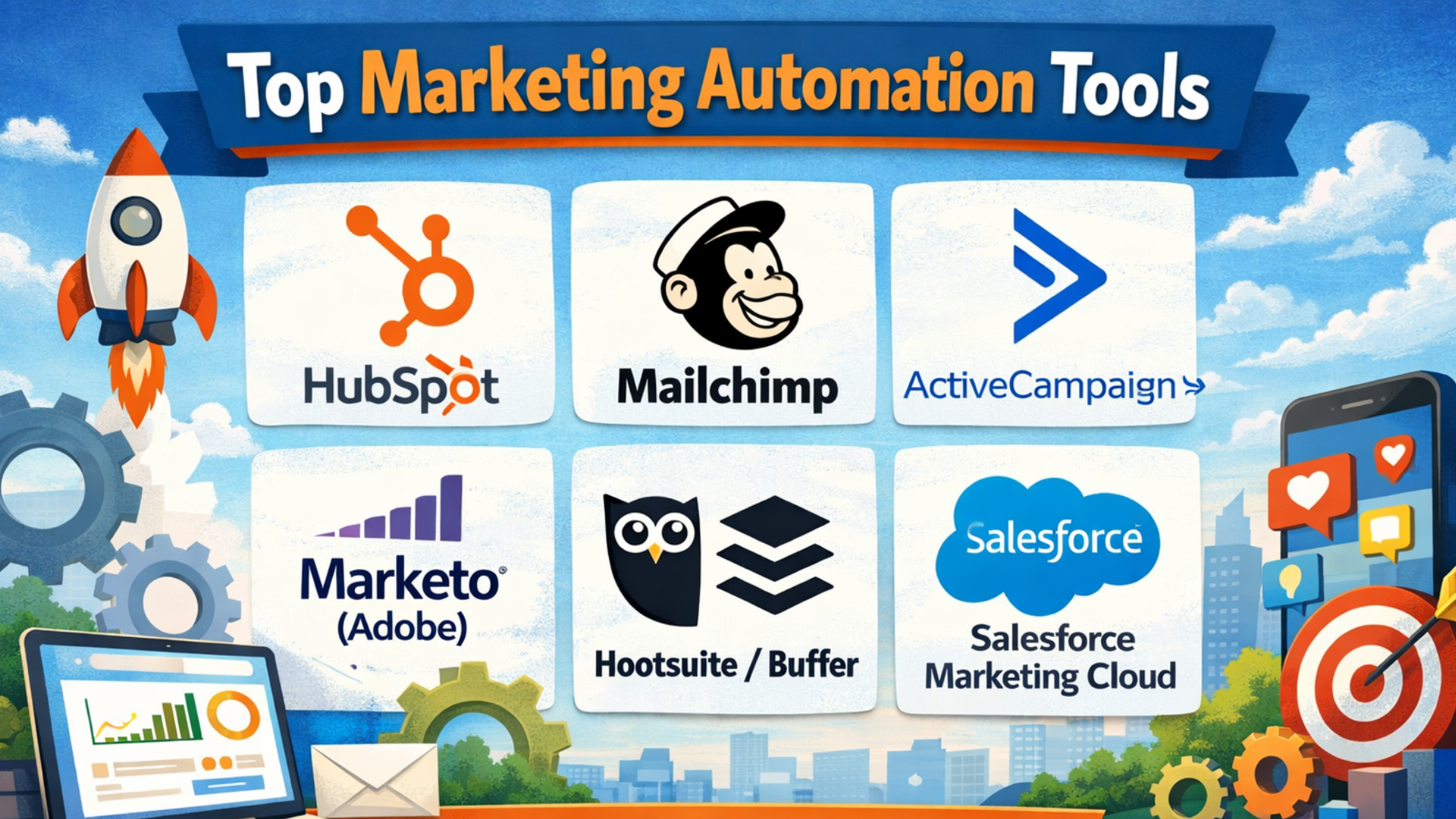
Choosing the right tools is essential for successful implementation. some top marketing automation platforms:
- HubSpot
HubSpot offers a comprehensive suite for email marketing, CRM, lead nurturing, and reporting. Its intuitive workflows and analytics make it suitable for businesses of all sizes. - Mailchimp
Known for email marketing, Mailchimp allows automated campaigns, A/B testing, and audience segmentation. Its straightforward design makes it perfect for small and medium-sized businesses. - ActiveCampaign
ActiveCampaign combines email marketing, automation, and CRM in a single platform. Its advanced automation workflows and personalization capabilities are perfect for complex marketing strategies. - Marketo (Adobe)
Marketo is designed for enterprise-level businesses, providing advanced lead scoring, multi-channel automation, and analytics. - Hootsuite / Buffer
These tools help schedule, automate, and analyze social media posts across multiple platforms, freeing time for content creation and engagement. - Salesforce Marketing Cloud
Salesforce integrates marketing automation with CRM, allowing for personalized campaigns and advanced reporting across multiple channels.
How to Implement Marketing Automation Successfully
Implementing marketing automation isn’t just about selecting software. To achieve maximum results, businesses need a structured approach. Here’s a step-by-step guide:
Step 1: Define Clear Goals
Before investing in marketing automation, clarify your objectives. Are you aiming to:
- Increase lead generation?
- Improve customer retention?
- Boost sales conversions?
- Streamline internal processes?
Setting measurable goals ensures your automation efforts are aligned with business priorities and can be effectively evaluated.
Step 2: Map the Customer Journey
Understanding your customer journey is crucial. Identify touchpoints, from the first interaction to post-purchase engagement, and determine where automation can enhance the experience.
For example:
- Awareness Stage: Automated social media posts or educational content emails.
- Consideration Stage: Targeted content and case studies delivered through email workflows.
- Decision Stage: Personalized offers or reminders triggered by specific actions.
Step 3: Segment Your Audience
Effective marketing automation relies on audience segmentation. Categorize your audience based on behavior, demographics, purchase history, or engagement level.
Segmented campaigns are more relevant and effective, leading to higher open rates, engagement, and conversions.
Step 4: Create Automated Workflows
Workflows are the backbone of marketing automation. Design sequences that guide prospects through the customer journey, including:
- Welcome emails for new subscribers
- Lead nurturing campaigns for prospects
- Abandoned cart reminders for e-commerce customers
- Re-engagement campaigns for inactive contacts
Automation workflows ensure timely, consistent communication without manual intervention.
Step 5: Personalize Content
Personalization increases engagement and trust. Use automation to dynamically insert names, recommend products, or customize content based on previous interactions. Personalized campaigns often outperform generic campaigns by a significant margin.
Step 6: Monitor, Analyze, and Optimize
Marketing automation is not a set-it-and-forget-it strategy. Continuous monitoring is essential. Monitor metrics like open rates, click-through rates, conversions, and ROI. Test different approaches using A/B testing and refine workflows based on results.
Marketing Automation Strategies That Work
1. Email Drip Campaigns
Drip campaigns are automated email sequences sent over time based on user actions or time intervals. They nurture leads, educate prospects, and maintain engagement without overwhelming recipients.
2. Lead Scoring
Lead scoring assigns a numerical value to each lead according to their behavior and level of engagement. Automation platforms can use these scores to prioritize high-quality leads and trigger targeted campaigns for nurturing.
3. Behavioral Triggers
Behavioral triggers send automated messages based on specific user actions. Examples include:
- Abandoned cart emails for e-commerce shoppers
- Download confirmation emails for content offers
- Personalized product recommendations based on browsing history
4. Multi-Channel Automation
Modern consumers connect with brands through multiple channels. Combining email, social media, SMS, and website automation creates a cohesive experience, ensuring your message reaches the audience wherever they are.
5. Analytics-Driven Optimization
Marketing automation platforms offer detailed insights into how campaigns are performing. Use these insights to refine content, timing, and targeting, continually improving results and ROI.
Benefits of Marketing Automation
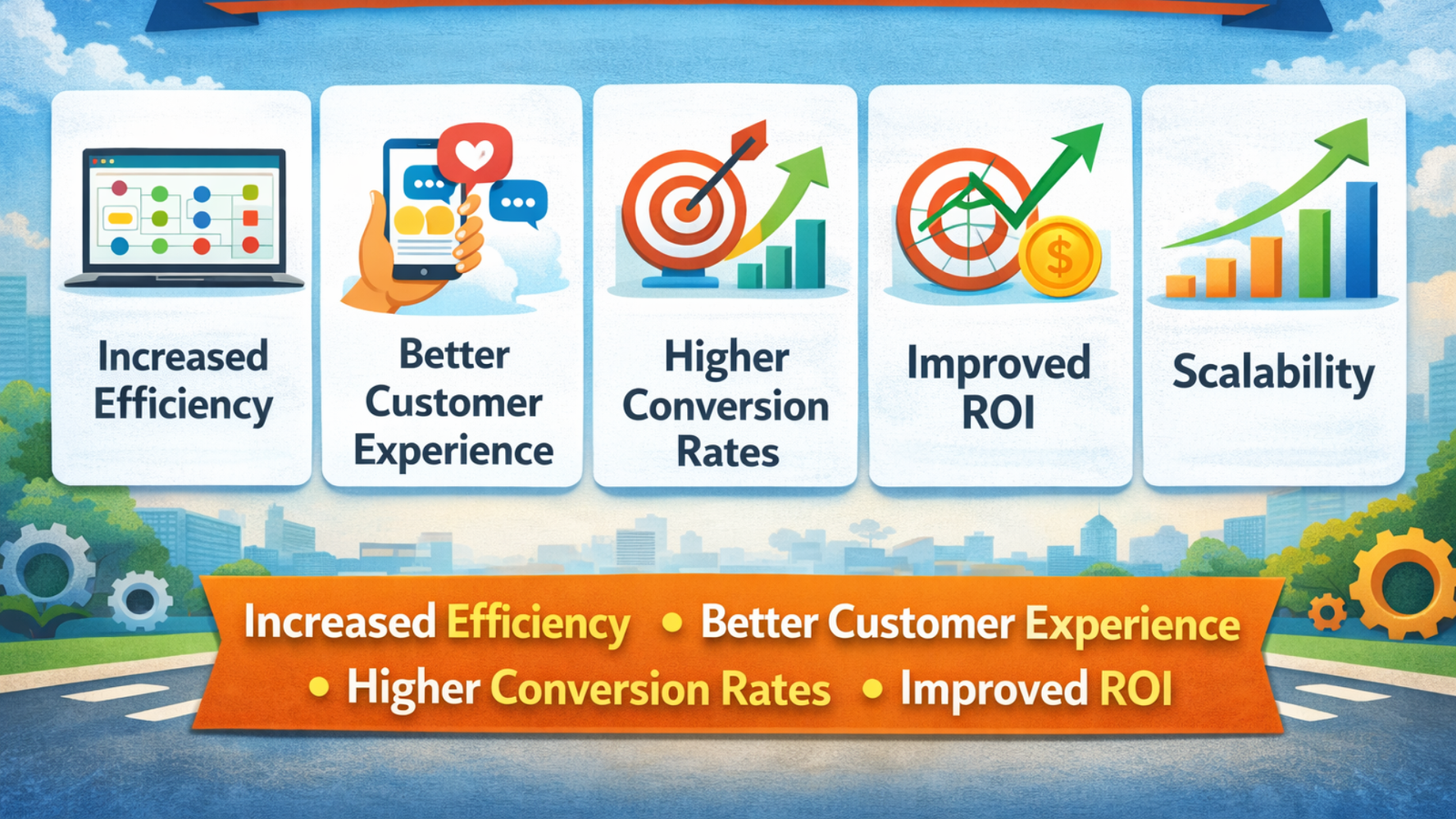
Increased Efficiency
By automating repetitive tasks, businesses can save significant time and resources, enabling marketing teams to focus on strategy and creativity.
Better Customer Experience
Automation allows personalized, timely, and relevant communication, improving customer satisfaction and loyalty.
Higher Conversion Rates
Targeted campaigns and lead nurturing workflows increase the likelihood of converting prospects into customers.
Improved ROI
Automation optimizes marketing spend by delivering the right message to the right audience at the right time, resulting in better returns.
Scalability
Marketing automation allows businesses to scale their efforts without proportionally increasing resources. As your audience grows, automation ensures consistent and efficient communication.
Common Challenges in Marketing Automation
While marketing automation offers significant advantages, businesses may face challenges during implementation:
- Complexity – Advanced automation tools can be overwhelming without proper training.
- Data Quality – Inaccurate or incomplete customer data can lead to ineffective campaigns.
- Over-Automation – Excessive automation can feel impersonal, so balance technology with human touch.
- Integration Issues – Connecting multiple platforms and data sources can be challenging but is crucial for success.
Addressing these challenges with careful planning and best practices ensures smooth implementation and maximum benefit.
Future Trends in Marketing Automation Explained
Marketing automation is no longer just about sending automated emails or scheduling social media posts. As technology advances, automation is becoming smarter, more predictive, and more integrated across channels. Here are the key trends shaping the future:
1. AI and Machine Learning
Artificial intelligence (AI) and machine learning are transforming marketing automation from a reactive tool into a predictive and strategic powerhouse.
- Predictive Analytics: AI can analyze historical data to predict customer behavior, such as which leads are most likely to convert or what products a customer may be interested in next.
- Content Recommendations: Machine learning algorithms can suggest personalized content to users based on their past interactions, browsing history, or purchase patterns.
- Automated Decision-Making: AI can automatically trigger campaigns or adjust messaging based on real-time user behavior, optimizing performance without manual intervention.
Example: If a customer frequently buys running shoes from your e-commerce store, AI can automatically send them an email recommending new arrivals in their size or style, increasing the chance of repeat purchases.
2. Conversational Marketing
Conversational marketing focuses on real-time, two-way communication between brands and customers. Chatbots, live messaging, and AI-powered assistants are central to this trend.
- Chatbots and Messaging Apps: Chatbots can answer common questions instantly, guide users through the buying process, or capture leads.
- Real-Time Engagement: By engaging users immediately, conversational marketing reduces friction in the customer journey and improves the overall experience.
- Integration with Automation: Chatbot interactions can feed into automated workflows, like triggering follow-up emails or adding new leads to nurture campaigns.
Example: A visitor asks a chatbot about product availability on your website. The bot instantly provides an answer and automatically adds the user to an email sequence with similar product recommendations.
3. Hyper-Personalization
Hyper-personalization elevates audience segmentation to a more precise and individualized level. Instead of broad categories, it focuses on creating individualized experiences for each customer using advanced data analysis and AI.
- Behavior-Based Personalization: Tracks each user’s actions, such as clicks, downloads, purchases, and page visits.
- Dynamic Content: Automated campaigns deliver content specifically tailored to each individual’s interests and needs.
- Improved Engagement and Conversion: Customers are more likely to respond to messages that feel unique and relevant to them.
Example: A software company can send different onboarding emails to new users based on which features they’ve explored during their first visit, making the experience more relevant and valuable.
4. Cross-Channel Integration
Customers interact with brands across multiple channels, from social media and email to SMS, websites, and apps. Cross-channel integration ensures that marketing automation works seamlessly across all platforms.
- Unified Customer View: Integrating multiple channels allows marketers to track interactions and behavior across the entire journey.
- Consistent Messaging: Automated campaigns maintain consistent messaging across channels, preventing confusion and improving brand perception.
- Omnichannel Campaigns: Automation tools can trigger actions on multiple platforms simultaneously, like sending an email, SMS, and push notification based on a single user behavior.
Example: A user abandons their shopping cart on your website. A cross-channel approach could automatically trigger an email reminder, a push notification through your app, and even retargeted ads on social media.
Conclusion
Marketing automation is not just a convenience—it’s a necessity for businesses seeking to stay competitive in the digital era. By streamlining processes, optimizing campaigns, and converting leads efficiently, marketing automation allows companies to work smarter, save time, and grow faster.
Implementing marketing automation successfully requires clear goals, audience segmentation, personalized content, and continuous optimization. With the right tools, workflows, and strategies, businesses can deliver exceptional customer experiences while achieving measurable results.
Embrace marketing automation today and transform your marketing from chaotic and reactive to strategic and results-driven. Streamline, optimize, and convert — that’s the power of marketing automation.
author: shifa